
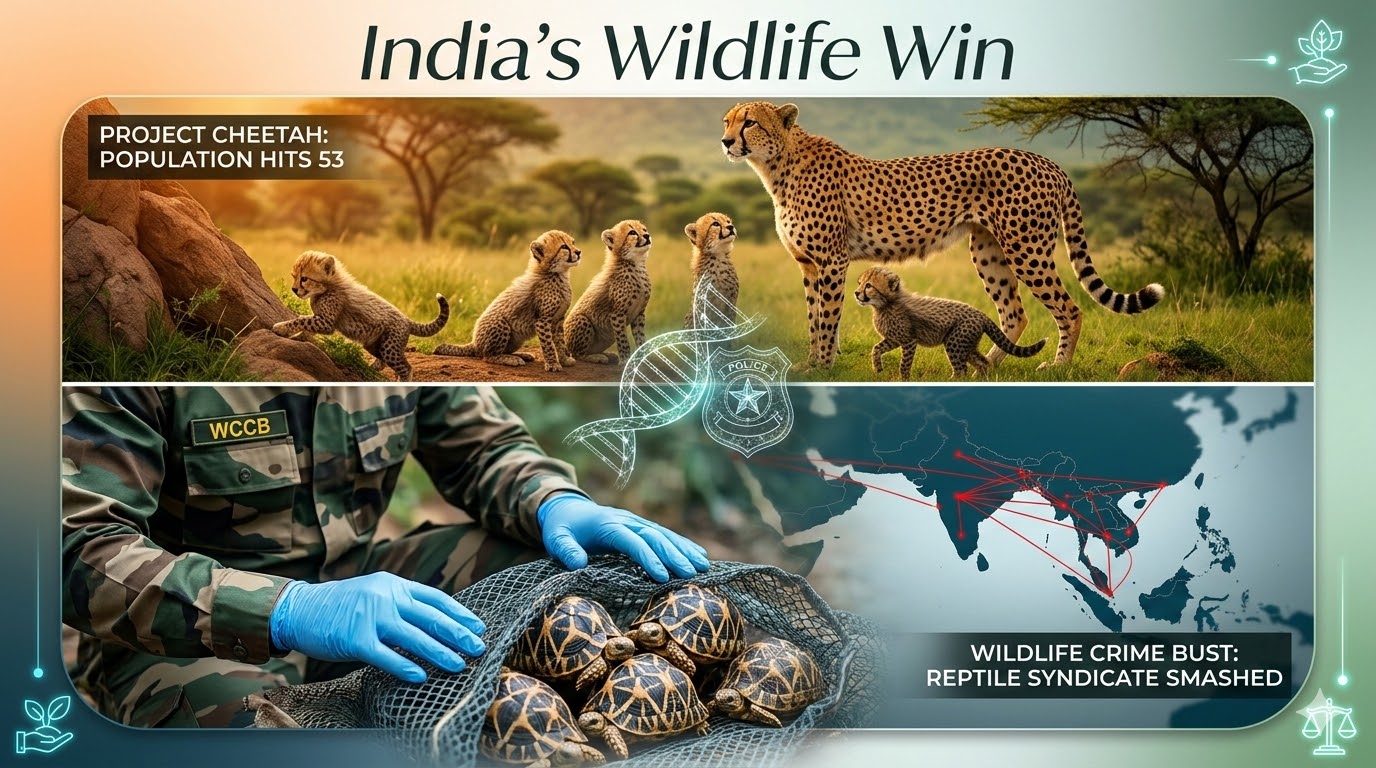
In a historic moment for wildlife enthusiasts and the nation, India’s Project Cheetah has achieved a major milestone. This development not only boosts India’s biodiversity but also marks the successful adaptation of these majestic big cats to Indian soil, promising a brighter future for eco-tourism and environmental conservation.
Quick Overview: Cheetah Conservation Update 2026
| Feature | Details |
| News Topic | Birth of 5 Cheetah Cubs in India |
| Location | Kuno National Park (KNP), Madhya Pradesh |
| Announced By | Shri Bhupender Yadav (Union Minister for Environment) |
| Release Date | March 09, 2026 |
| Total Cheetah Count | 53 |
| Official Website | pib.gov.in |
Key Highlights: A New Era for Kuno National Park
The recent announcement by the Ministry of Environment, Forest, and Climate Change has brought several key updates to the forefront:
- Jwala’s Third Litter: The Namibian cheetah named Jwala has successfully given birth to five healthy cubs. This is notably her third time becoming a mother on Indian soil.
- Indian-Born Success: With this new birth, the total number of cheetah cubs born in India has risen to 33.
- Milestone Reached: This marks the 10th successful cheetah litter in India since the start of the relocation project.
- Total Population: The total number of cheetahs in India (including adults and cubs) has now officially crossed the half-century mark, reaching 53.
- Expert Care: The success is attributed to the relentless efforts of veterinarians and field staff at Kuno National Park.
Recent Developments in Project Cheetah
Apart from Jwala’s new cubs, several other positive updates have bolstered the project in early 2026:
- Gamini’s Contribution: Recently, the South African cheetah Gamini also became a mother for the second time, delivering four cubs.
- New Arrivals from Botswana: On February 28, 2026, nine more cheetahs (6 females and 3 males) were received from Botswana and are currently in quarantine at KNP.
- Acclimatization: All newborns and new arrivals are under strict health monitoring before being released into the larger landscape.
Key Highlights for Aspirants:
- The Power of Progeny: With this 10th successful litter on Indian soil, the number of Indian-born thriving cubs has risen to 33. This is a significant indicator of the species’ successful acclimatization to Indian conditions.
- Expanding the Gene Pool: On February 28, 2024, nine more cheetahs (6 females, 3 males) were received from Botswana, further diversifying the population.
- Conservation Success: The Union Minister for Environment, Forest and Climate Change, Shri Bhupender Yadav, attributed this success to the dedicated efforts of veterinarians and field staff.
- Mains Value-Add: You can cite this as a successful case study of Ex-situ to In-situ conservation and international cooperation in wildlife restoration.
While conservation efforts grow, the fight against the “silent trade” of wildlife continues. In a coordinated operation, the Madhya Pradesh State Tiger Strike Force (MP STSF) and the Wildlife Crime Control Bureau (WCCB) arrested Tarak Nath Ghosh, a notorious kingpin of a transnational reptile smuggling racket.
Details of the Operation:
- The Arrest: Ghosh was apprehended in Kanpur, Uttar Pradesh, after being on the run for eight years.
- The Scope of Crime: The syndicate was involved in the illegal trade of turtles and gharials. His network spanned across multiple Indian states (UP, MP, Andhra Pradesh, Bihar, Odisha, Tamil Nadu, Karnataka, and West Bengal).
- International Links: The network is suspected to have footprints in Bangladesh, Thailand, Myanmar, and Singapore, highlighting the organized nature of wildlife trafficking.
- Mains Value-Add: This arrest underscores the importance of inter-agency coordination (STSF + WCCB) and the role of specialized task forces in tackling organized environmental crime.
Connectivity for CSE Aspirants: Environment & Biodiversity Case Study
Why these two news items matter together? Conservation is not just about bringing species back; it is about protecting the ones we have.
- Project Cheetah represents Restoration Ecology: Bringing back a flagship species to restore grassland ecosystems.
- The Smuggling Bust represents Protective Governance: Strengthening the legal and enforcement framework to prevent biodiversity loss through illegal means.
Significance for the Common Citizen
Why should this news matter to you?
- Eco-Tourism Boom: The increase in the cheetah population is expected to make Kuno National Park a global wildlife destination, creating jobs for local communities.
- Environmental Balance: Reintroducing top predators helps in maintaining the ecological balance of the grassland ecosystems in central India.
- National Pride: India is now the only country in the world to host a growing population of cheetahs translocated from a different continent.
How to Visit Kuno National Park (Step-by-Step Guide)
If you are planning to witness this conservation success story firsthand, follow these steps:
- Visit the Official Portal: Go to the Madhya Pradesh Wildlife Department website.
- Check Availability: Select “Kuno National Park” and check for available safari slots (Sasan or Tiktoli gates).
- Book Permit: Fill in your ID details and pay the required permit fees online.
- Reach the Park: The nearest major airport is Gwalior, and the nearest railway station is Shivpuri or Gwalior.
- Follow Guidelines: Ensure you follow all park rules to avoid disturbing the newly born cubs and their mothers.
Conclusion
The birth of five cubs to Jwala is more than just a number; it is a testament to India’s commitment to restoring its lost natural heritage. As the cheetah population reaches 53, the success of Project Cheetah serves as a global model for wildlife restoration.
While today’s update focuses on faunal conservation and enforcement, you can round off your Biodiversity notes by reading our previous deep dive on the Conservation of Medicinal and Aromatic Plants (MAPs)—a crucial component of India’s floral heritage.
Frequently Asked Questions (FAQs)
1. How many cheetahs are currently in India? As of March 2026, there are a total of 53 cheetahs in India, including those brought from Africa and those born locally.
2. Where is Jwala the cheetah from? Jwala is a cheetah that was brought to India from Namibia as part of the initial translocation project.
3. In which state is Kuno National Park located? Kuno National Park is located in the Sheopur and Morena districts of Madhya Pradesh, India.
4. How many cubs have been born in India so far? A total of 33 cubs have been born thriving on Indian soil since the inception of the project.