
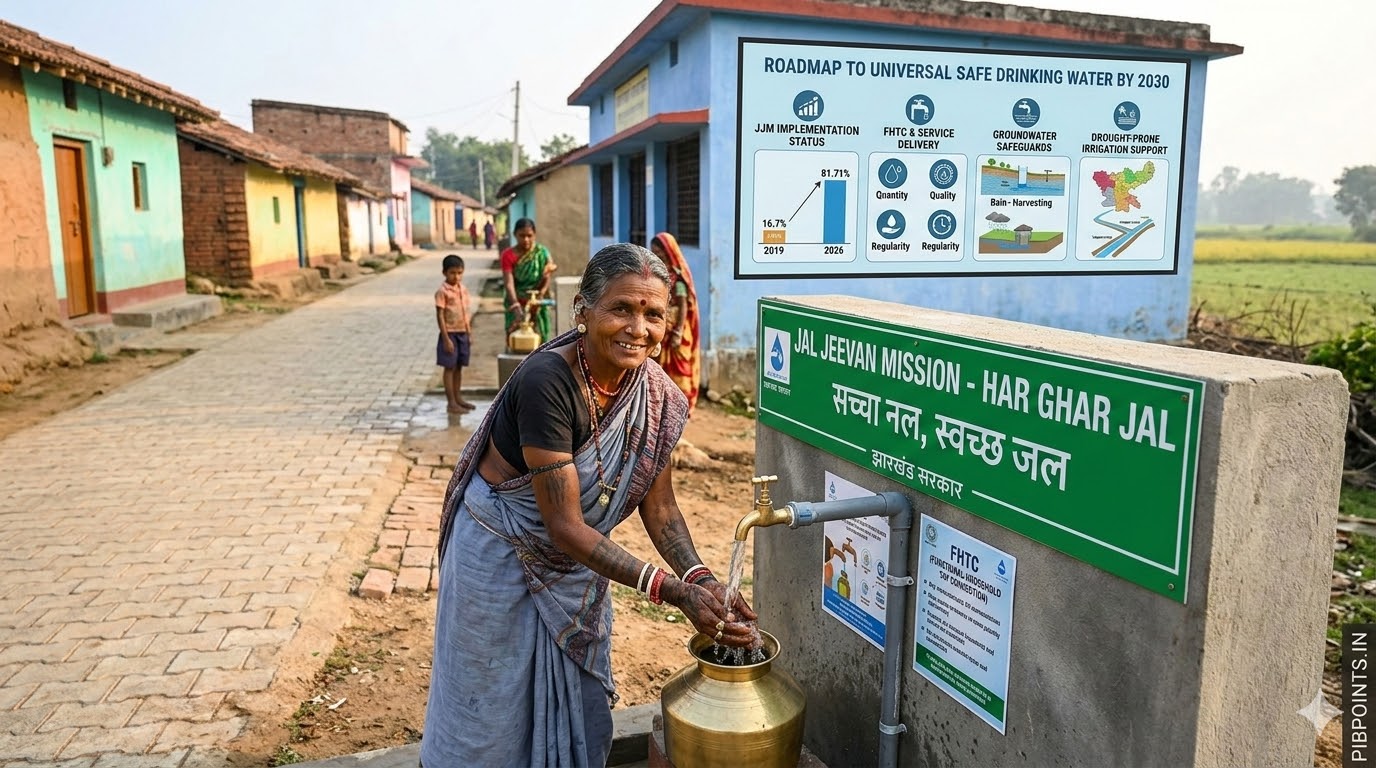
The Government of India is rapidly transforming rural lives through the Jal Jeevan Mission (JJM). This mega-initiative ensures that every home gets clean tap water, significantly reducing water-borne diseases and the daily struggle of millions.
With the latest announcement to extend the mission until 2028, the focus has shifted from just building pipes to ensuring long-term “service delivery.” Here is a detailed look at the progress, new targets, and how you can check the status of your village.
Quick Overview: Jal Jeevan Mission (JJM)
| Feature | Details |
| Scheme Name | Jal Jeevan Mission (Har Ghar Jal) |
| Launched By | Ministry of Jal Shakti, Govt of India |
| Extension Year | Extended until 2028 (Budget 2025-26) |
| Category | Rural Infrastructure & Public Health |
| Official Website | ejalshakti.gov.in |
Key Highlights of JJM Progress (as of March 2026)
The Mission has achieved remarkable milestones since its launch in August 2019. Here are the core data points:
- Massive Coverage: When the mission started, only 16.7% (3.23 Crore) rural homes had tap water. Today, over 81.71% (15.82 Crore) households are covered.
- Water Quality: Over 11,488 habitations previously affected by contaminants like Arsenic and Fluoride are now being provided safe water through short-term or long-term measures.
- Service Delivery Focus: The government is now monitoring 55 Litres Per Capita Per Day (LPCD) to ensure every individual gets enough water.
- Decentralized Management: The program is managed by local Pani Samitis and Gram Panchayats, making it a “Jan Andolan” (People’s Movement).
Important Benefits & Features for Citizens
The Jal Jeevan Mission is not just about water; it’s about health and empowerment.
- Potable Water Quality: Regular testing of water sources to ensure they are free from chemical and bacteriological contamination.
- Sustainability: Focus on Jal Shakti Abhiyan: Catch the Rain to recharge groundwater and ensure the water source doesn’t go dry.
- Local Employment: The Nal Jal Mitra program is training local youth in plumbing, electrical work, and pump operation, creating rural jobs.
- Special Focus Areas: Priority is given to Aspirational Districts, SC/ST majority villages, and drought-prone regions.
How to Check Jal Jeevan Mission Status for Your Village?
You can track the progress of tap water connections in your specific area through the official JJM Dashboard. Follow these steps:
- Visit the Dashboard: Go to the official JJM IMIS Portal.
- Select State & District: Choose your state and district from the dropdown menu.
- View Village Details: You can drill down to the Block and Village level to see how many houses have been provided with connections.
- Check Functionality: You can also see the “Functionality Assessment” which shows if the water is actually being delivered regularly.
Groundwater Safeguards and Quality Monitoring
Ensuring “Source Sustainability” is vital for long-term water security. JJM prioritizes habitations affected by geogenic contaminants like Arsenic and Fluoride.
- Arsenic & Fluoride Remediation: All rural habitations in the country are currently provided with safe drinking water through at least short-term measures (like Community Water Purification Plants).
- Monitoring Quality: Over 81% of supply sources were found free from chemical contamination in recent assessments.
- Community Leadership: The Jal Shakti Abhiyan: Catch the Rain (JSA: CTR) initiative promotes water conservation and source sustainability, driven by local communities and women’s leadership.
Recommended Read: Beyond infrastructure, discover how India celebrates its water heritage and promotes conservation at the Jal Mahotsav 2026.
Innovative Strategies and Digital Governance
The mission employs a decentralized, community-managed approach to ensure transparency and accountability:
- Nal Jal Mitra: A program aimed at strengthening local technical skills for the maintenance of water systems.
- Digital Tracking: Use of the JJM Dashboard, geo-tagging of assets, and linking of Aadhar for targeted delivery.
- Sensor-based Solutions: Pilot projects for real-time measurement and monitoring of water supply in villages.
- Third-Party Inspection: Ensuring the quality of work through TPIAs before payments are released.
Bridging the Gap: Drought-Prone and Quality-Affected Areas
Special attention is given to difficult terrains and drought-prone regions. For villages with water quality issues, states have been advised to:
- Implement piped water schemes based on alternative safe sources.
- Install Community Water Purification Plants (CWPPs) to provide 8-10 LPCD for drinking and cooking as an interim measure.
- As of March 2026, there are approximately 11,488 quality-affected habitations remaining (primarily in Rajasthan, Assam, and Odisha), where focused interventions are ongoing.
Urban Complement: AMRUT 2.0
While JJM focuses on rural India, the Atal Mission for Rejuvenation and Urban Transformation (AMRUT) 2.0 is working toward making 500 cities “water secure.” So far, 3,531 water supply projects worth over ₹1.19 Lakh Crore have been approved under this urban mission.
Exam Notes for Aspirants
- Nodal Ministry: Ministry of Jal Shakti.
- SDG Link: Goal 6 (Clean Water and Sanitation).
- Focus: Shifting from “Habitation-level” to “Household-level” (Service Delivery).
- Key Standard: 55 litres of potable water per person per day.
- Status of SBM(G): Complements JJM; 84% of villages are now ODF Plus (Model).
Irrigation Support in Drought-Prone Areas
Parallel to drinking water, the government is also strengthening the Pradhan Mantri Krishi Sinchai Yojana (PMKSY).
- 59 projects are specifically benefitting drought-prone areas.
- The funding ratio has been increased to 60:40 (Centre:State) for these regions to speed up work.
- States like Maharashtra, Rajasthan, and Karnataka have seen significant irrigation potential created in the last three years.
Conclusion
The extension of the Jal Jeevan Mission until 2028 proves the government’s commitment to “Har Ghar Jal.” By integrating technology like Aadhar-linked monitoring and geo-tagging, the mission ensures transparency and reaching the last mile.
Frequently Asked Questions (FAQs)
Q1: What is the target date for 100% tap water coverage? Originally 2024, the mission has been extended until 2028 in the 2025-26 Budget to ensure universal and sustainable coverage.
Q2: How much water is provided per person under JJM? The mission aims to provide 55 litres per capita per day (LPCD) of prescribed quality.
Q3: Is the water tested for safety? Yes, JJM includes a massive water quality monitoring component where local women are trained to use Field Test Kits (FTKs) to check for contamination.
Q4: Can I apply for a tap connection online? Applications are generally handled by the local Gram Panchayat or Pani Samiti under the State Rural Water Supply Department. You should contact your local Sarpanch for inclusion.