
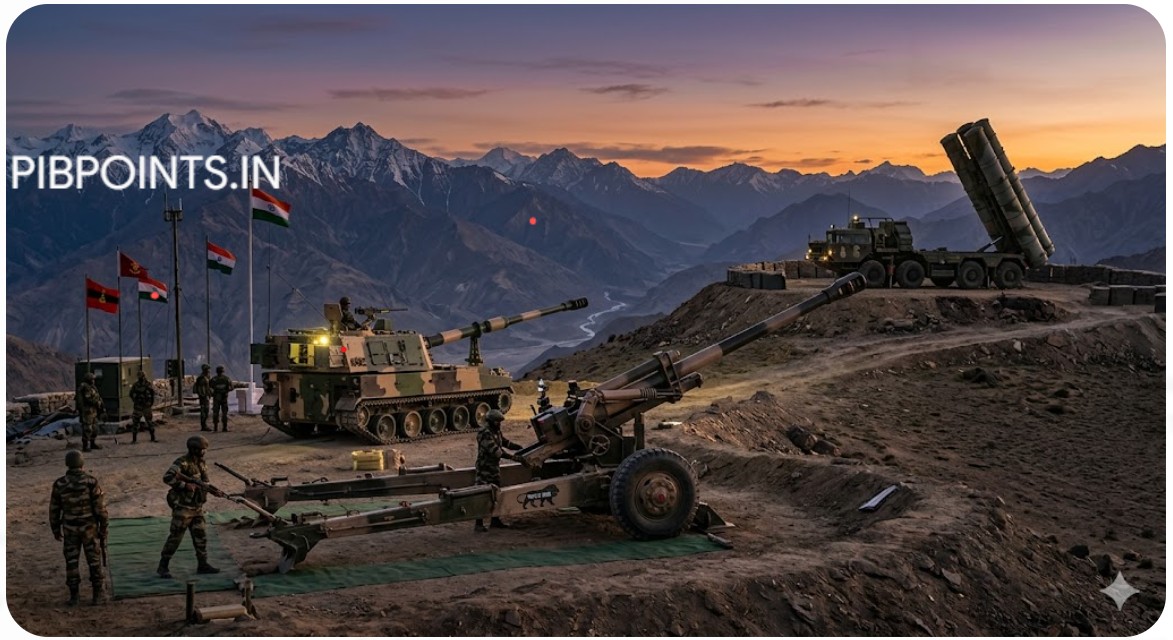
In a move that fundamentally reshapes the security architecture of South Asia, the Defence Acquisition Council (DAC), led by Raksha Mantri Shri Rajnath Singh, has greenlit a massive wave of procurement. On March 27, 2026, the council granted Acceptance of Necessity (AoN) for various defence proposals valued at an estimated ₹2.38 lakh crore.
This isn’t just another government clearing; it is a milestone in India’s journey toward Atmanirbhar Bharat (Self-Reliant India). With the fiscal year 2025-26 drawing to a close, these approvals push India’s annual defence procurement to historic highs, signaling a shift from “buyer” to “builder” in the global arms trade.
What is Acceptance of Necessity (AoN) in Defence?
To understand the magnitude of this ₹2.38 lakh crore announcement, one must understand the AoN process. In the complex world of Indian military procurement, the AoN is the “Point of No Return.” It signifies that the government has formally validated a service’s (Army, Navy, or Air Force) requirement for specific hardware.
Once an AoN is granted, the formal tendering process (RFP) begins. For global vendors and indigenous manufacturers like HAL, DRDO, and private players, the AoN is the starting gun for a multi-billion dollar race.
1. Strengthening the Indian Army: From Artillery to Air Defence
The Indian Army received a significant portion of the March 2026 approvals, focusing on “high-lethality” and “high-mobility” systems required for two-front contingency planning.
Air Defence Tracked System
The modern battlefield in Ukraine and the Middle East has proven that without mobile air defence, ground forces are sitting ducks. The DAC’s approval for an Air Defence Tracked System provides real-time Control and Reporting (C&R) capabilities, allowing ground units to intercept enemy drones and loitering munitions on the move.
Dhanush Gun System: The Indigenous Powerhouse
The Dhanush Gun System—often called the “Desi Bofors”—is a 155mm/45 calibre artillery piece. By granting further AoNs for this system, the government is doubling down on indigenous artillery.
- Range: Enhanced to engage targets at longer distances.
- Terrain: Tested for the extreme cold of Ladakh and the humid jungles of the Northeast.
Surveillance and Communication
The approval of the Runway Independent Aerial Surveillance System is a game-changer for high-altitude warfare. These drones do not require a paved airstrip, allowing frontline commanders in the Himalayas to launch ISR (Intelligence, Surveillance, and Reconnaissance) missions from rugged mountain ridges.
2. Indian Air Force: The S-400 and Strategic Airlift
The Indian Air Force (IAF) is currently navigating a fleet renewal phase. The DAC approvals address two critical gaps: long-range denial and transport logistics.
The S-400 Triumf: An “Area Denial” Shield
Perhaps the most discussed approval is for the S-400 Long Range Surface-to-Air Missile System. While India had previously procured S-400 units, this new AoN suggests a scaling up of the “Integrated Air Defence System.” The S-400 can track and neutralize up to 80 targets simultaneously, creating a “no-fly zone” for enemy stealth fighters and cruise missiles.
Replacing the Aging AN-32 and IL-76
The Medium Transport Aircraft (MTA) approval marks the beginning of the end for the Soviet-era AN-32 and IL-76 fleets. These aircraft are the backbone of IAF logistics, and their replacement with modern, fuel-efficient platforms is vital for rapid troop deployment during border standoffs.
The Rise of the Remotely Piloted Strike Aircraft (RPSA)
The RPSA approval indicates India’s entry into the “A-Tier” of drone warfare. Unlike surveillance drones, these are Stealth ISR and Strike platforms designed to penetrate enemy airspace undetected, execute a strike, and return—mimicking the capabilities of the American MQ-9 Reaper.
3. Indian Coast Guard: Multipurpose Maritime Security
Maritime security isn’t just about big frigates. The Coast Guard’s approval for Heavy Duty Air Cushion Vehicles (Hovercrafts) addresses the “last mile” of coastal security. These vehicles are essential for:
- High-speed patrolling in the marshy terrains of the Rann of Kutch.
- Search and Rescue (SAR) during cyclone seasons.
- Logistics support for remote island territories.
Data Analysis: A Record-Breaking Fiscal Year
The numbers for FY 2025-26 are staggering when compared to previous years. This data highlights the government’s aggressive spending to bridge the technology gap with regional adversaries.
| Metric | FY 2024-25 (Approx) | FY 2025-26 (Record) |
| Total AoN Value | ₹4.50 Lakh Crore | ₹6.73 Lakh Crore |
| Number of Proposals | 42 | 55 |
| Contracts Signed | 380 | 503 |
| Value of Contracts | ₹1.70 Lakh Crore | ₹2.28 Lakh Crore |
Strategic Analysis: The E-E-A-T Perspective
From an expert standpoint, these approvals are not just about spending; they are about strategic autonomy. By prioritizing the Dhanush Gun System and Indigenous Aero Engines, India is insulating its military from global supply chain disruptions (like those seen during the Russia-Ukraine conflict).
The “Atmanirbhar” Factor: Over 90% of the ₹2.38 lakh crore approved in this session is likely to be sourced from Indian vendors under the “Buy (Indian-IDDM)” category. This creates a massive “Value-Add” for the domestic economy, boosting defence tech startups and Tier-2 manufacturers.
Frequently Asked Questions (FAQs)
Q1. Why is the ₹2.38 lakh crore deal significant?
This news is a major catalyst for the Indian stock market, specifically for companies like HAL, BEL, and Bharat Forge.
Q2. Is the S-400 better than the Patriot missile system?
Both have pros and cons. The S-400 generally has a longer engagement range (up to 400km) and can handle a wider variety of targets, while the Patriot is often praised for its battle-hardened integration with NATO systems.
Q3. When will the equipment actually be delivered?
Granting an AoN is the start. Typically, it takes 2–5 years from AoN to actual induction, depending on whether the system is “Off-the-shelf” or requires indigenous development.
Conclusion
The DAC’s March 27, 2026, meeting will be remembered as the moment India crossed the rubicon in defence spending. With a total of ₹6.73 lakh crore in AoNs for the full fiscal year, the message is clear: India is preparing for a future where its security is guaranteed by its own industries.
📚 Recommended Resources for Aspirants
| Product Name | Key Benefit | Check Price |
| Indian Economy by Ramesh Singh | Comprehensive coverage of Defense Budgeting and the “Atmanirbhar Bharat” initiative. | Check Price |
| Internal Security by Ashok Kumar (IPS) | Deep dive into defense procurement, border security, and the role of the Indian Army/IAF. | Check Price |
| Science & Tech for Civil Services | Essential for understanding the technicalities of S-400, UAVs, and Indigenous Artillery. | Check Price |
| Oxford Student Atlas for India | Critical for mapping the “Two-Front” contingency plans in Ladakh and the Northeast. | Check Price |
| Current Affairs Quarterly Review | Stay updated on the latest DAC approvals and PIB releases for the 2026-27 cycle. | Check Price |
Source: PIB, Ministry of Defence, Government of India — Press Release (Release ID: 2246125).
Comments are closed.